Universities and research institutions are increasingly prioritizing hands-on practice and innovation in plant science and modern agriculture. To meet this demand, providing students and researchers with the right tools is paramount. Advanced indoor grow equipment offers an unparalleled platform for controlled environment agriculture and controlled environment farming, enabling smart plant cultivation, detailed experimentation, and the development of new plant varieties. By creating stable, replicable environments, these systems eliminate external variables, allowing for the precise study of plant genetics, nutrient uptake, and responses to environmental stressors. This technology empowers researchers to push the boundaries of agricultural science, fostering breakthroughs that can address global food security and climate change.
Lighting System: This system provides the specific light spectrum, intensity, and photoperiod required for photosynthesis. Using advanced LED technology, researchers can manipulate light to trigger different growth phases, enhance phytochemical production, or study plant responses to light quality.
· Planting System: This refers to the system used to support plants and provide nutrients. Common planting approaches include hydroponics (soilless cultivation in nutrient-rich water) and substrate-based systems.
· Nutrient Supply System: A critical component that automates the delivery of essential nutrient solution. This system precisely mixes and dispenses nutrient solutions, allowing researchers to test the effects of different mineral concentrations and ensure optimal plant nutrition.
· Environmental Control System: This system meticulously manages atmospheric conditions within the unit. It includes sensors and regulators for temperature, humidity, and carbon dioxide (CO2) levels, creating a stable and replicable environment.Intelligent Control System: The brain of the operation, this system integrates and automates all other subsystems. When equipped with a cloud-based platform like the 4D BIOS intelligent system, it offers multi-terminal software monitoring (HMI, Web, and APP). This powerful feature allows researchers to check the status of plants and device operations anytime, anywhere, providing unparalleled remote oversight and data management for complex experiments.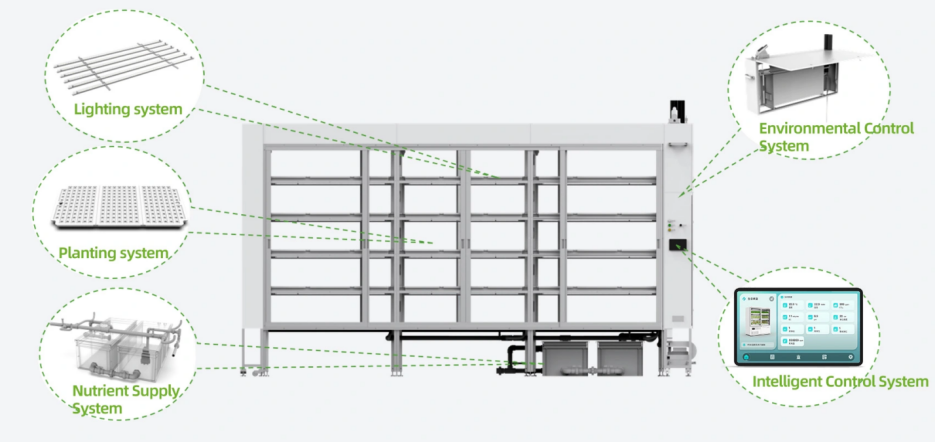
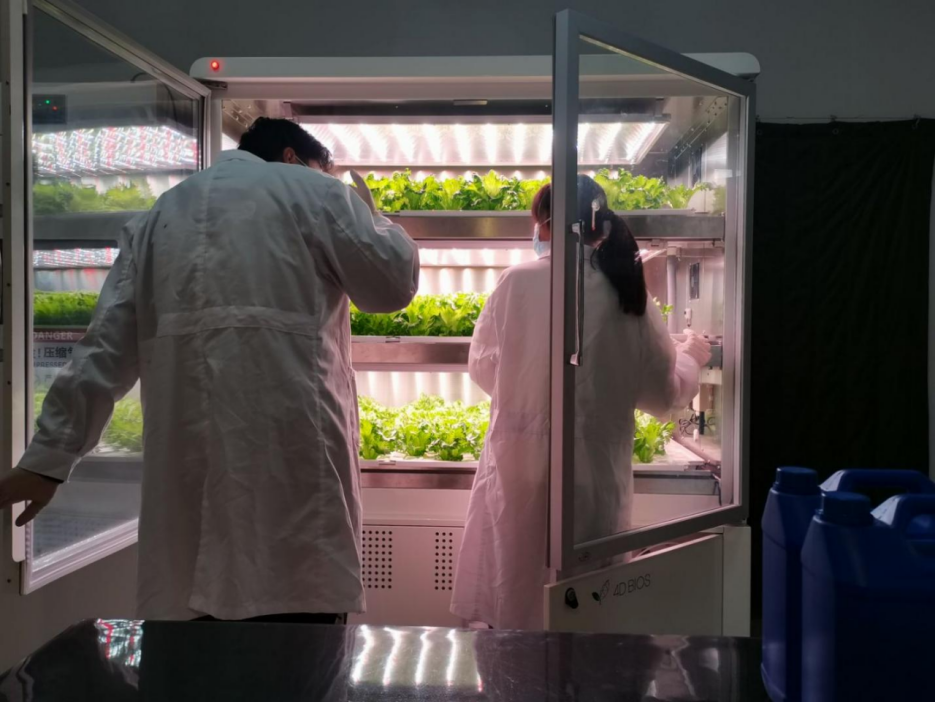
What Is Indoor Grow Equipment?
Indoor grow equipment is a specialized, self-contained planting system designed for precise environmental control. Often built with a modular design, these enclosed units integrate multiple systems to create optimal growing conditions without reliance on external building infrastructure. This flexibility allows them to be adapted to various indoor spaces for rapid deployment in research settings.Key Integrated Subsystems
The core technology of indoor grow equipment lies in its integrated subsystems, which work together to manage every aspect of plant growth. Generally, it has five systems that work as one, including:Lighting System: This system provides the specific light spectrum, intensity, and photoperiod required for photosynthesis. Using advanced LED technology, researchers can manipulate light to trigger different growth phases, enhance phytochemical production, or study plant responses to light quality.
· Planting System: This refers to the system used to support plants and provide nutrients. Common planting approaches include hydroponics (soilless cultivation in nutrient-rich water) and substrate-based systems.
· Nutrient Supply System: A critical component that automates the delivery of essential nutrient solution. This system precisely mixes and dispenses nutrient solutions, allowing researchers to test the effects of different mineral concentrations and ensure optimal plant nutrition.
· Environmental Control System: This system meticulously manages atmospheric conditions within the unit. It includes sensors and regulators for temperature, humidity, and carbon dioxide (CO2) levels, creating a stable and replicable environment.Intelligent Control System: The brain of the operation, this system integrates and automates all other subsystems. When equipped with a cloud-based platform like the 4D BIOS intelligent system, it offers multi-terminal software monitoring (HMI, Web, and APP). This powerful feature allows researchers to check the status of plants and device operations anytime, anywhere, providing unparalleled remote oversight and data management for complex experiments.
Why Indoor Grow Equipment Matters
Indoor planting equipment plays a vital role in advancing both research and practical cultivation. Its importance can be understood in several key aspects:1.Controlled Experimentation
The primary advantage of these systems is the ability to eliminate confounding environmental variables. Researchers can precisely manipulate light, temperature, humidity, CO2, and nutrient levels to conduct highly controlled studies. This ensures that observed results are directly attributable to the variables being tested, leading to reliable, repeatable, and publishable findings on plant growth, physiology, and environmental responses.2.Support for New Variety Development
Developing new plant varieties with desirable traits—such as drought resistance, enhanced nutritional value, or faster growth cycles—requires a stable environment. Indoor grow equipment provides the perfect setting for breeding programs, genetic modification studies, and phenotyping. It accelerates the testing and selection process by ensuring consistent conditions for each generation of plants.3.Bridging Theory and Practice
For students, this equipment is an invaluable tool that connects textbook knowledge with practical application. It allows them to move beyond theoretical concepts and engage in hands-on cultivation, observing the direct impact of environmental changes on plant life. This experiential learning deepens their understanding of plant science and prepares them for careers in modern agriculture and biotechnology.4.Encouraging Scientific Curiosity
Small and year-round trials let students and early-career researchers design tests, gather data, and learn how to handle living systems. Hands-on work with growth systems means better engagement and learning outcomes in plant and garden programs. It builds confidence and good lab habits without needing perfect weather or large plots.Applications
Indoor grow equipment serves as a versatile tool with proven applications in various academic and research functions.1.Education
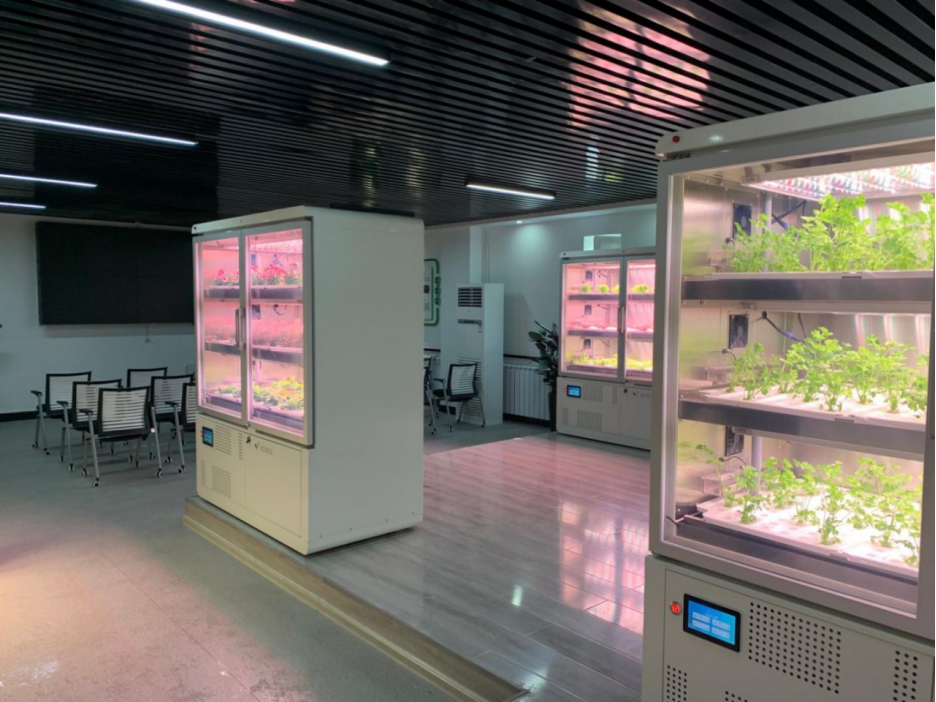
In the classroom and teaching lab, this equipment provides essential hands-on training for students in agriculture, botany, and environmental science. It makes complex biological processes visible and interactive. For instance, a university in Heilongjiang built an “eco-classroom” centered around these systems, offering an immersive environment for project-based learning in botany and agricultural science, where students can manage a crop from seed to harvest.
2.Research
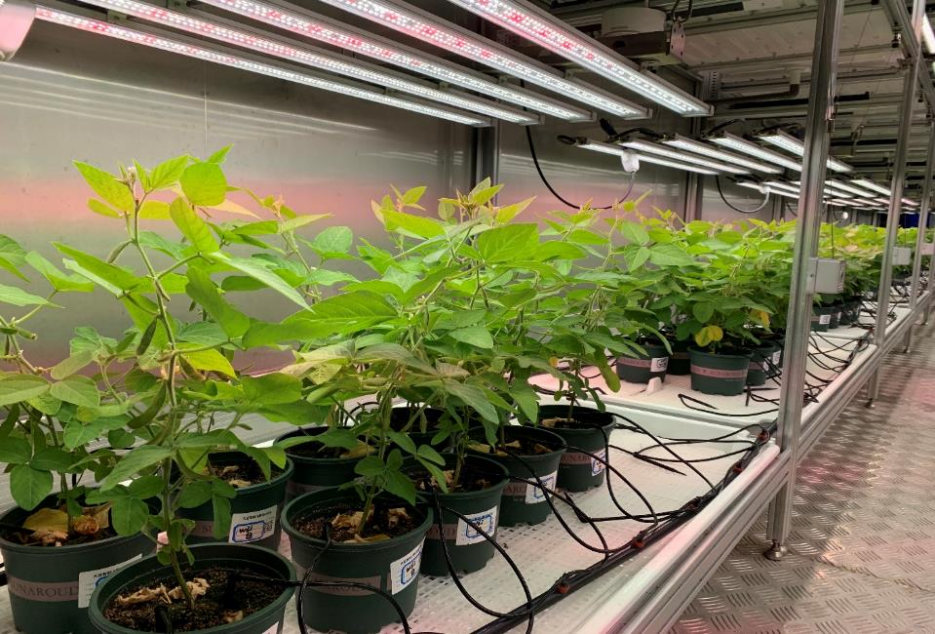
At the core of academic and institutional research, these systems enable controlled trials for a wide range of applications, from fundamental plant biology to applied agricultural science. They are crucial for crop improvement studies and the development of new cultivation methods for sustainable agriculture. A prime example is the Zhijiang Laboratory, located in Hangzhou, Zhejiang, which serves as a national-level research center. It utilizes this controlled environment to accelerate the development of new soybean varieties, a vital project for national food security.
3.Innovation Competitions
Universities can leverage this equipment to host innovation challenges and competitions. These systems provide a standardized platform for student-led experiments, allowing teams to test new hypotheses, develop and validate prototypes, and work on breakthrough agricultural projects in a controlled, competitive, and collaborative environment.
Conclusion
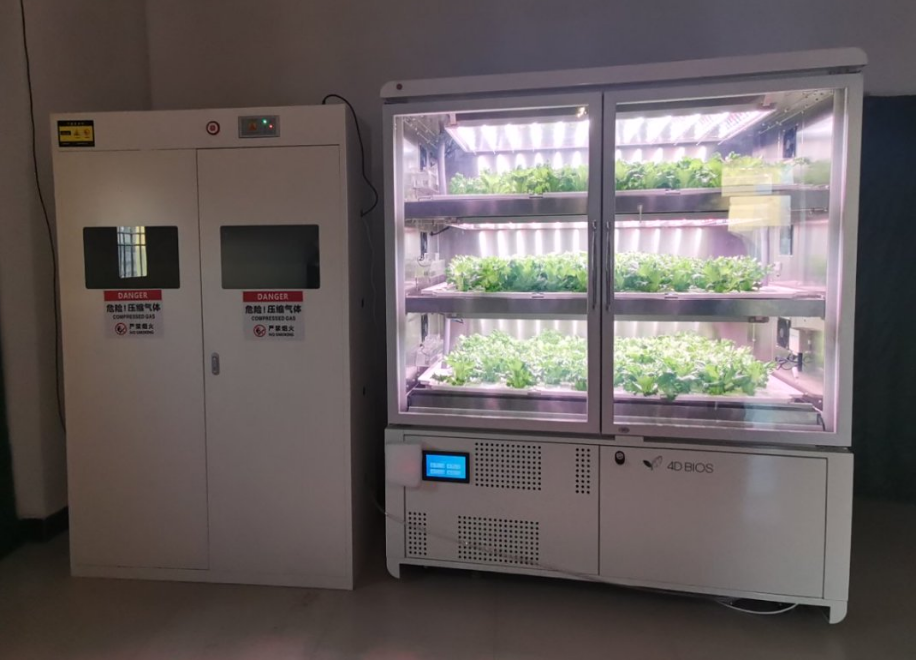
In conclusion, integrating cutting-edge indoor grow equipment is a transformative step for any institution serious about advancing agricultural science. For those seeking a compact, reliable, and powerful solution, the indoor grow box from 4D Bios is an excellent choice. This turnkey system offers high-precision control over all critical environmental variables, making it an ideal platform for student education, variety development, and controlled experimentation. Investing in such advanced tools is a direct investment in the future of research and sustainable agriculture. Explore more details at 4D Bios!